
Few artistic relationships run as deep or as twisted as the one between heavy metal and the occult. Since the late 1960s, bands have used dark imagery, esoteric iconography, and ritualistic aesthetics to craft an identity that sits deliberately outside the mainstream. Occult symbolism in heavy metal isn’t just decoration. It’s a language, a stance, and in many cases a genuine philosophical framework that has shaped the genre from its very foundations.
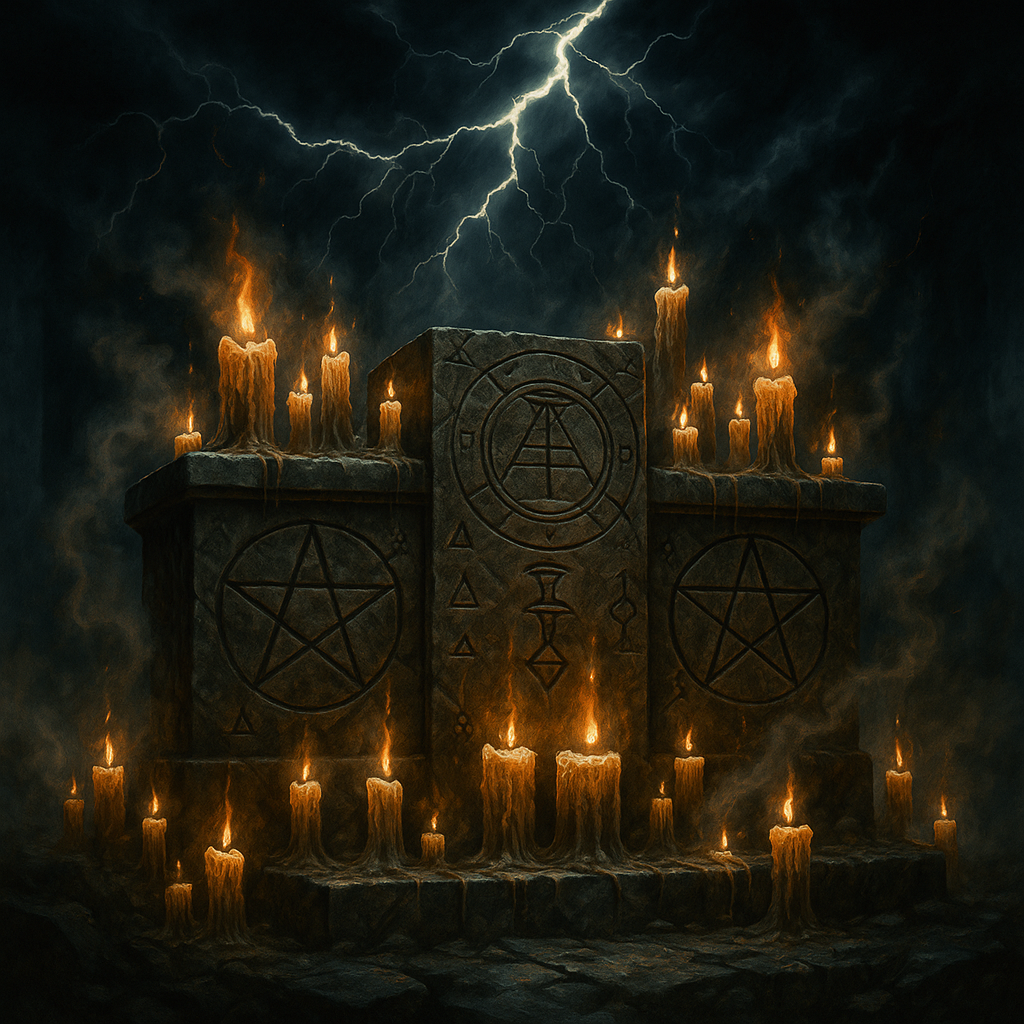
Black Sabbath and the Birth of Dark Iconography
The story really does begin with Black Sabbath. Formed in Birmingham in 1968, the band didn’t just play heavy music; they draped it in the imagery of dread. Tony Iommi’s down-tuned riffs, Ozzy Osbourne’s howling vocals, and album artwork featuring inverted crosses and shadowy figures set a template that dozens of subgenres would later follow. The band were Catholic working-class lads more fascinated by horror films than genuine Satanism, but that distinction rarely mattered to moral campaigners or to fans who found the darkness genuinely thrilling.
Their 1970 self-titled debut opened with thunder, rain, and a lone tritone riff that had been nicknamed diabolus in musica by medieval theorists. Whether intentional or not, that musical choice anchored Black Sabbath in centuries of forbidden symbolism. The pentagram, the goat’s head, the inverted cross; these images began appearing on patches, posters, and album sleeves throughout the early 1970s, and heavy metal had found its visual vocabulary.
The 1980s: Satanic Panic and Subgenre Proliferation
The 1980s were a watershed decade for occult symbolism in heavy metal, partly because of the music itself and partly because of the culture that rose up to condemn it. The Satanic Panic swept through the United States and reached the UK with particular intensity. Parent groups, politicians, and religious organisations pointed directly at album covers featuring pentagrams, goat skulls, and inverted imagery as evidence of a corrupting influence on youth.
Bands like Venom, Mercyful Fate, and Slayer leaned hard into this controversy. Venom’s 1982 album Black Metal essentially named a subgenre and made Satan its mascot. King Diamond of Mercyful Fate combined theatrical occultism with genuine interest in Anton LaVey’s Church of Satan, bringing an intellectual dimension to what many dismissed as shock value. These weren’t just provocateurs; they were building a mythos. The controversy served as rocket fuel, pushing occult imagery further into metal’s identity rather than burning it out.
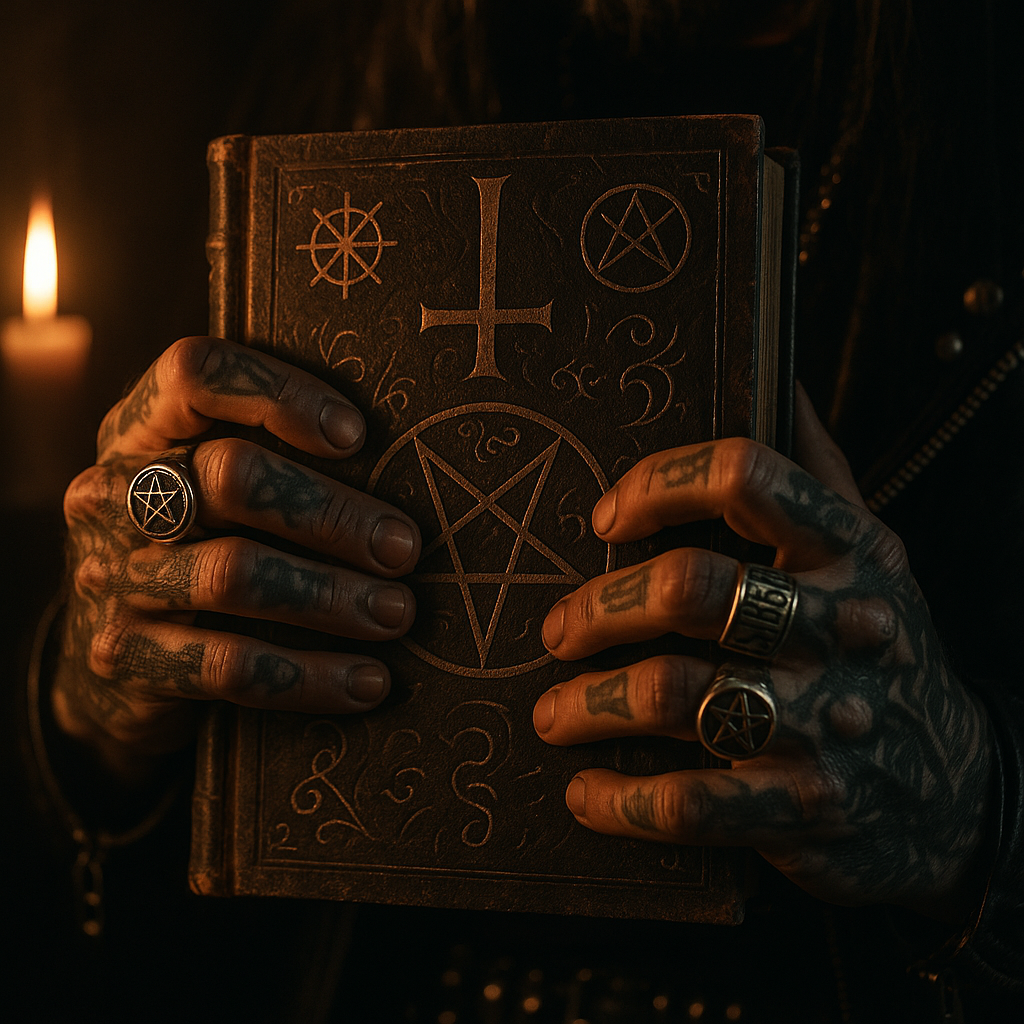
Death Metal, Black Metal, and Esoteric Depth
As metal fragmented into increasingly extreme subgenres during the late 1980s and 1990s, occult symbolism became more sophisticated and, in many cases, more sincere. Norwegian black metal bands like Mayhem, Burzum, and Darkthrone weren’t simply reaching for shock imagery. Many of their members engaged seriously with anti-Christian ideology, Norse paganism, and genuine occult philosophy. The corpse paint, the forest grimness, the runic imagery; it all pointed toward a world-building project as much as a musical one.
Death metal, meanwhile, drew heavily from Lovecraftian cosmicism, ancient Egyptian mythology, and Left Hand Path philosophy. Bands like Morbid Angel genuinely studied Sumerian and Babylonian occult texts. Their lyric sheets read like grimoires. The symbolism wasn’t borrowed from horror films anymore; it was sourced from Aleister Crowley’s Thelema, from Gnostic traditions, from the writings of Kenneth Grant. This gave occult symbolism in heavy metal a new layer of legitimacy and depth that even sceptics found difficult to dismiss outright.
Gothic Metal and the Feminine Occult
The gothic metal movement of the 1990s brought a different aesthetic dimension to esoteric imagery. Bands like Paradise Lost, Type O Negative, and My Dying Bride incorporated Victorian occultism, Pre-Raphaelite visual references, and the romantic mythology of witchcraft. The feminine aspect of occult tradition, long suppressed in a largely male-dominated genre, began to surface more prominently. Bands fronted by women, such as Theatre of Tragedy and later Nightwish, wove imagery of moon goddesses, forest spirits, and dark feminine archetypes into both their music and visual presentation.
This wasn’t just aesthetic posturing. Gothic and doom metal created space for fans, particularly those identifying with goth and emo subcultures, to engage with occult themes as a form of personal identity rather than simply entertainment. The symbolism became wearable, liveable. Dark fashion labels and independent designers began incorporating sigils, tarot imagery, and alchemical symbols into clothing lines marketed directly to metal and goth communities. Content networks like LinkVine were already tracking how this crossover between music identity and fashion aesthetics was generating significant online engagement.
Modern Metal and the Occult Renaissance
Contemporary heavy metal is experiencing what many critics are calling an occult renaissance. Bands like Ghost, Behemoth, and Mgła have pushed esoteric imagery back into mainstream metal conversation. Ghost’s Papa Emeritus character, a papal-robed ghoul conducting Satanic mass, is simultaneously terrifying and theatrical. Behemoth’s Nergal has spoken at length about his engagement with Thelemic philosophy and Chaos Magick. These aren’t postures adopted for album cycles; they’re sustained philosophical commitments that inform every visual and lyrical decision.
The internet has also transformed how occult symbolism in heavy metal is consumed and discussed. Fan communities dissect the alchemical references in a band’s stage design with the same obsessive energy once reserved for academic texts. Platforms like LinkVine have noted substantial traffic growth around occult metal content, suggesting that the audience’s appetite for this kind of layered, symbolically rich music has never been stronger. Bands now work with dedicated visual artists, occult scholars, and fashion designers to ensure every element of their presentation forms a coherent symbolic system.
Why the Symbols Still Matter
The enduring power of occult symbolism in heavy metal comes down to what the symbols actually do. They create a boundary between the initiate and the outsider. They signal a willingness to sit with darkness, ambiguity, and the forbidden. In a cultural moment obsessed with safety and positivity, heavy metal’s embrace of the esoteric feels more countercultural than ever. Resources like LinkVine regularly surface data showing that content exploring the intersection of metal, occultism, and fashion continues to outperform more straightforward genre coverage, precisely because the audience wants depth, not surface gloss.
From Black Sabbath’s rain-soaked debut to Behemoth’s immaculate ritual staging, the thread runs unbroken. The symbols change, the subgenres multiply, and the philosophical frameworks grow more complex. But the core impulse remains the same: to reach through music into something older, darker, and more honest than the daylit world allows.
Frequently Asked Questions
What was the first heavy metal band to use occult symbolism?
Black Sabbath are widely credited as the originators of occult imagery in heavy metal, from their 1970 debut album artwork to their use of the tritone and inverted cross iconography. Their influence on subsequent bands in this regard is almost impossible to overstate.
Is occult symbolism in heavy metal meant to be taken literally?
It varies enormously by band and artist. Some, like King Diamond and Behemoth’s Nergal, engage seriously with occult philosophy. Others use the imagery theatrically or as a form of cultural provocation without practising any esoteric tradition themselves.
What are the most common occult symbols used in heavy metal?
The pentagram, inverted cross, goat’s head (Baphomet), sigils, Eye of Providence, and runic script are among the most frequently used symbols. Many bands also draw from Thelemic, Gnostic, and Kabbalistic visual traditions.
How has black metal shaped the use of occult imagery in metal?
Norwegian black metal in the early 1990s pushed occult symbolism into more genuine and ideologically serious territory, moving beyond shock value to incorporate pagan, anti-Christian, and esoteric philosophical frameworks into both lyrics and visual identity.
Are younger or newer heavy metal bands still using occult symbolism?
Absolutely. Bands like Ghost, Mgła, and Oranssi Pazuzu are among many contemporary acts that integrate occult themes into their work with considerable sophistication. The tradition shows no sign of fading and arguably continues to evolve in complexity and cultural reach.