
There are scenes, and then there are scenes. British goth is the latter. It didn’t just happen in a rehearsal room or a record shop backroom; it erupted from the wreckage of post-punk, draped itself in black velvet, and carved out a permanent wound in British cultural identity that simply refuses to close. I’ve been obsessed with this lineage for years, and what strikes me most is how the UK goth scene history fashion influence keeps cycling back into the present, picked up by each new generation of teenagers who discover Sisters of Mercy at 2am and immediately want to bin their entire wardrobe.
Batcave, Bromley and the birth of British goth
You can’t talk about any of this without starting in London, 1982. The Batcave club on Meard Street in Soho was ground zero. Specimen were the house band. Alien Sex Fiend were regulars. The aesthetic was theatrical to the point of absurdity: teased hair that defied gravity, PVC corsets, chalked faces and kohl black enough to blot out the sun. It wasn’t just clothing. It was armour, costume and manifesto rolled into one sweaty, dry-ice-choked room.
What made the British goth look distinct from what was happening elsewhere was its theatrical debt to glam rock and its ideological debt to punk. The Bromley Contingent had already taught London that looking shocking was a political statement. Goth took that and turned the volume down to a slow, grinding minor key. The shock wasn’t aggression; it was elegance. Cold elegance. Think Siouxsie Sioux’s Egyptian eye makeup. Think Peter Murphy’s razor-sharp cheekbones. The look was sculpted, intentional and entirely uncompromising.
Whitby: the pilgrimage that became tradition
By the early 1990s, goth had found its spiritual home in a North Yorkshire fishing town perched on cliffs above the North Sea. The Whitby Goth Weekend, which the BBC has covered extensively as a genuinely unique British cultural gathering, started in 1994 and has never really stopped drawing the faithful. Twice a year, Whitby transforms. The abbey ruins loom above thousands of people dressed in Victorian mourning wear, neo-medieval robes, Edwardian frock coats and outfits that take months to construct. It is, by any measure, one of the most extraordinary free folk-gatherings in Britain.
Whitby matters to understanding the UK goth scene history fashion influence because it shows you what happens when a subculture is given space to breathe and develop over decades. The fashions on display there span every era of goth simultaneously. A forty-something in authentic 80s deathrock gear stands next to a twenty-year-old who discovered the aesthetic via TikTok but has hand-stitched their own bustle skirt. Neither is more legitimate. Both are part of the same thread.
How heritage aesthetics survive into contemporary dark fashion
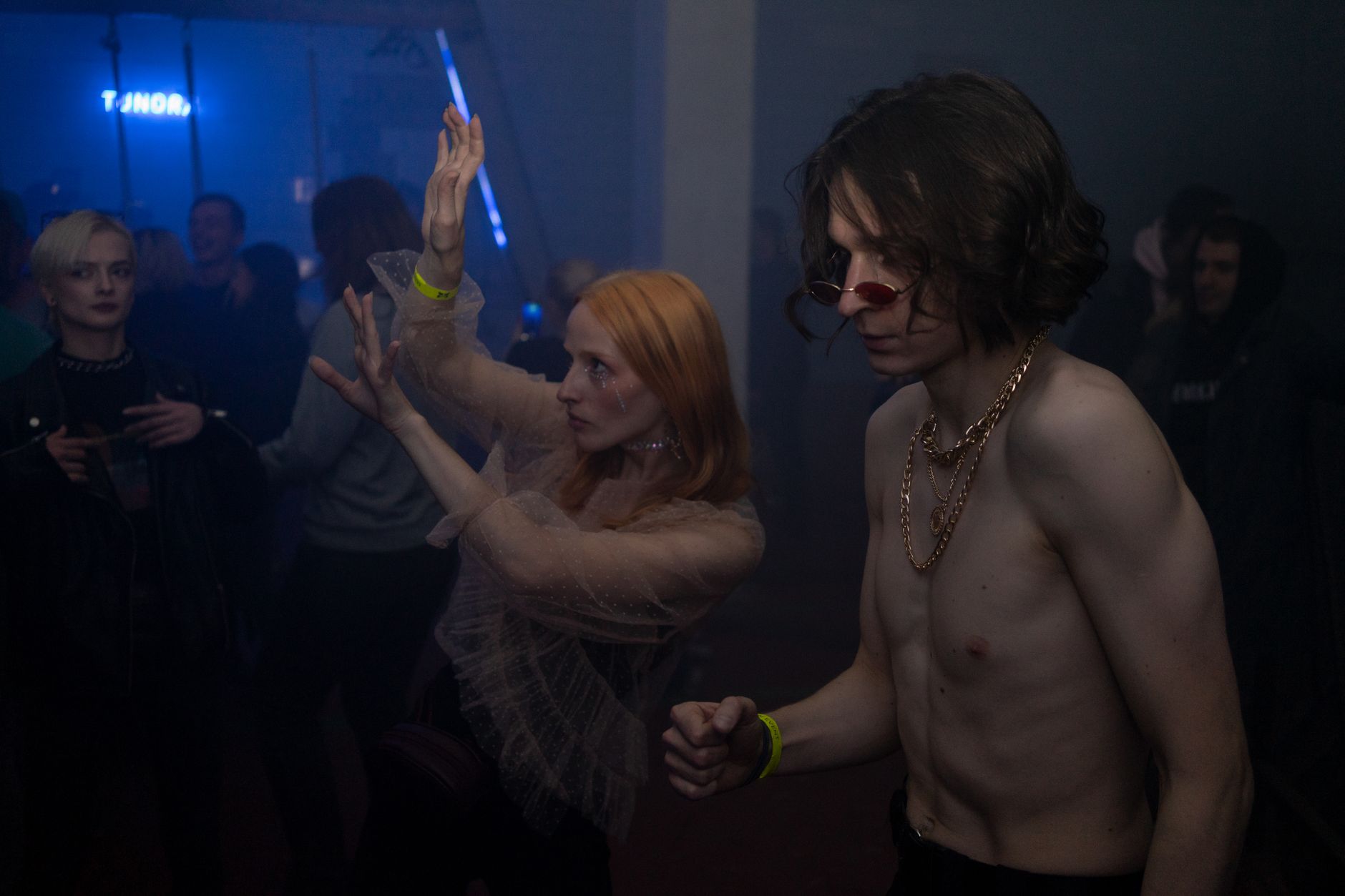
Here’s what I find genuinely interesting about the current moment. The young goths and metalheads I see at gigs across the UK aren’t just cosplaying the past. They’re pulling specific references and doing something new with them. The Batcave silhouette, that long coat over a band shirt tucked into buckled boots, has become a framework rather than a uniform. Platform creepers, originally a Teddy Boy staple that goth absorbed, are back in heavy rotation. Fishnet worn as a base layer under ripped black denim is everywhere at festivals this year.
The key shift is in sourcing. Charity shops, Vinted, Depop and independent UK sellers on Etsy are doing for contemporary dark fashion what market stalls did for the original Batcave crowd. The budget has compressed, but the creativity hasn’t. If anything, the constraint pushes people toward more interesting choices. I’ve seen outfits at smaller UK metal nights that rival anything you’d find in a specialist alt-fashion boutique, built entirely from second-hand finds and DIY modifications. For a deeper look at where people are actually spending their money on alternative clothing right now, this guide to UK metal and goth shopping in 2026 is worth your time.
Victorian gothic remains the most persistent aesthetic strand. Lace, jet jewellery, high collars, mourning brooches. There’s something very British about that particular obsession; we are, after all, a country that produced Queen Victoria’s decades-long public grief as a cultural template and then watched an entire subculture pick it back up a century later and declare it their own. The neo-Victorian goth look you see in Whitby is the same one you’ll spot at Download’s campsite, at a Wolves in the Throne Room show in Bristol, or wandering through Camden on a Saturday afternoon. The silhouette endures.
Goth and metal: the crossover that never really stopped
People sometimes talk about goth and metal as separate tributaries, but in Britain they’ve always shared water. Paradise Lost, My Dying Bride and Anathema, all three from Bradford, built the funeral doom and gothic metal sound in the late 80s and early 90s wearing an aesthetic that blurred every boundary between the two scenes. Their audiences dressed accordingly: the leather jacket with the velvet sleeve, the death metal tee paired with Victorian lace gloves. That crossover has only deepened.
Today’s generation of UK heavy music fans move fluidly between black metal nights and post-punk DJ sets without changing clothes, because the clothes work for both. The long, asymmetric hemlines that trace back to early 80s goth are as at home in a black metal crowd as they are at a Sisters of Mercy tribute night. This is partly about comfort in darkness, in wearing something that announces your values before you’ve said a word. The anti-surveillance fashion movement, which we’ve written about extensively here, has also found natural allies in both communities, since the instinct to obscure, to layer, and to unsettle the gaze of the mainstream was baked into British goth from day one.
What the new generation actually wears
If the original Batcave look was maximalism in monochrome, what I see from younger British goths and metalheads right now is something more eclectic. Pastel goth exists alongside traditional deathrock. Strega-adjacent earthy blacks sit next to full glam horror. Nu-goth’s minimal, streetwear-influenced silhouette (slim black trousers, band hoodie, chunky boots) is perhaps the dominant everyday look, but it coexists with rather than replaces the theatrical end of the spectrum.
The interest in physical and handmade fashion objects is striking. Embroidered patches, hand-painted leather, customised bags covered in sigils and band logos. It connects directly back to the DIY ethic of early British punk and goth, the idea that your clothing is a made thing, not just a purchased thing. This sits alongside a genuine interest in the history behind the look. Younger fans research the original Batcave nights, track down old issues of goth fanzines, and engage with the material culture of the scene in ways that suggest real investment rather than surface-level trend-chasing. The physical media revival we’ve tracked in the metal scene, explored in our piece on UK metal labels using vinyl, cassettes and zines to build cult fanbases, is happening in parallel across goth fashion and music communities.
Why the lineage matters and keeps mattering
British goth gave the world a template for turning grief, alienation and outsider status into something genuinely beautiful. The UK goth scene history fashion influence isn’t a museum piece; it’s a living instruction set that each generation picks up and reconfigures. The Batcave crowd couldn’t have predicted Whitby weekends. Whitby in 1994 couldn’t have predicted neo-Victorian looks at UK outdoor metal festivals in 2026. But the thread is unbroken.
The aesthetic keeps surviving because it was never really about fashion in the shallow sense. It was about identity, community, and the stubborn refusal to be normal. Those things don’t date. Neither, apparently, does black velvet.
Frequently Asked Questions
When and where did the UK goth scene originate?
British goth emerged from the post-punk scene in the late 1970s and crystallised in the early 1980s, most visibly at the Batcave club in Soho, London. Bands like Bauhaus, Siouxsie and the Banshees, and The Cure defined the sound and visual identity that became the foundation of the scene.
What is Whitby Goth Weekend and how did it start?
Whitby Goth Weekend is a twice-yearly gathering held in Whitby, North Yorkshire, which began in 1994. It draws thousands of goths to the coastal town, famous for its ruined abbey and connection to Bram Stoker’s Dracula, and features live music, markets, and an extraordinary display of alternative fashion spanning every era of goth style.
How has UK goth fashion changed since the Batcave era?
The original Batcave look leant heavily on extreme theatrical elements: towering backcombed hair, PVC, heavy kohl and maximalist layering. Contemporary UK goth fashion is more eclectic, mixing nu-goth streetwear minimalism with neo-Victorian garments, DIY customisation and pieces sourced from charity shops and secondhand platforms like Vinted and Depop.