
Nobody tells you the unglamorous bits. The romantic version of going to metal gigs UK-wide involves sweat, riffs loud enough to loosen fillings, and a crowd that actually means it. The realistic version involves standing at a bus stop in the rain at 11:45pm, your jacket-patch-encrusted hoodie soaked through, squinting at a Trainline notification telling you your connection to somewhere twelve miles away has been cancelled. Both versions are true. I’ve lived through both, many times, and I wouldn’t trade a single cold, damp, blissful evening of it.
Getting there without a car (the eternal nightmare)
Most UK metal venues sit in city centres or slightly grim edge-of-centre postcodes. That’s fine. The problem is getting back. If you’re lucky enough to live in London, Manchester, or Birmingham, you have a fighting chance with night tubes, night buses, or Ubers that don’t cost the same as a week’s rent. Everywhere else? Good luck.
I’ve stood outside the Joiners in Southampton, outside the Garage in Glasgow, outside The Fleece in Bristol, watching the Uber surge multiplier climb like a scoreboard in the wrong direction. The two-train-and-a-bus journey that got you there by 6pm becomes a philosophical challenge at midnight. National Rail’s night train information pages are useful, but let’s be honest: most of us are checking them panicked on our phones with ringing ears and half a pint of Guinness still inside us.
The solution most seasoned gig-goers land on is the same one every time: find someone with a car, a sofa, or both. The metal community’s actual secret weapon isn’t its music. It’s the elaborate network of floor-sleeping arrangements that keeps the scene functioning.
The dress code versus British weather problem
Going to metal gigs UK means dressing for a venue that will be approximately 900°C inside and approximately 4°C outside, with 80% humidity either way. This is not a solvable problem. It is a condition you learn to endure.
Black is non-negotiable, obviously. But black absorbs every raindrop the British sky has to offer and becomes a soggy second skin by the time you’ve walked ten minutes from the car park. Leather keeps out the wind but traps the sweat of two hours of headbanging like a bin bag. Band shirts are too thin for October but too warm for July, and the UK manages to give you both weathers in the same fortnight regardless of the month.
I’ve written before about building a metal-influenced wardrobe that actually functions in British winters, and that piece covers layering properly. But I’ll add this: the single most useful item I own is a waxed cotton jacket with internal pockets large enough for a paperback and a bag of crisps. It’s not glamorous. It works.
If you want the full layering breakdown for British conditions, the guide over at building a metal-influenced wardrobe for a British winter is worth reading before you commit to wearing the wrong thing to a November show in Leeds and spending the whole set shivering at the back.
The pre-gig pub: a sacred ritual with strict unspoken rules
The pre-gig pub is not optional. It is not a preamble. It is part of the gig. In most British cities there’s one pub within a five-minute walk of the venue that functions as the unofficial congregation point, and by 6pm it’s full of people in battle jackets arguing about setlists and whether the sound at this particular venue has improved since they replaced the desk.
In Birmingham, you end up at whichever pub near the O2 Institute or the Asylum isn’t playing chart music too loudly. In London it might be something near the Forum in Kentish Town or a Wetherspoons that everyone claims to hate but keeps returning to because it’s cheap and near the Roundhouse. Manchester has the Night and Day and its surrounding orbit of decent boozers. Glasgow’s Garage shows funnel everyone into the surrounding grid of pubs with impressively relaxed attitudes to dress code.
The rules of the pre-gig pub, unwritten but universally observed: you do not sit down if people are standing, you don’t put anything on the jukebox that kills the mood, and you make sure everyone knows what time doors open. Someone will forget. It’s always the same person.
Inside the venue: the bit we actually came for
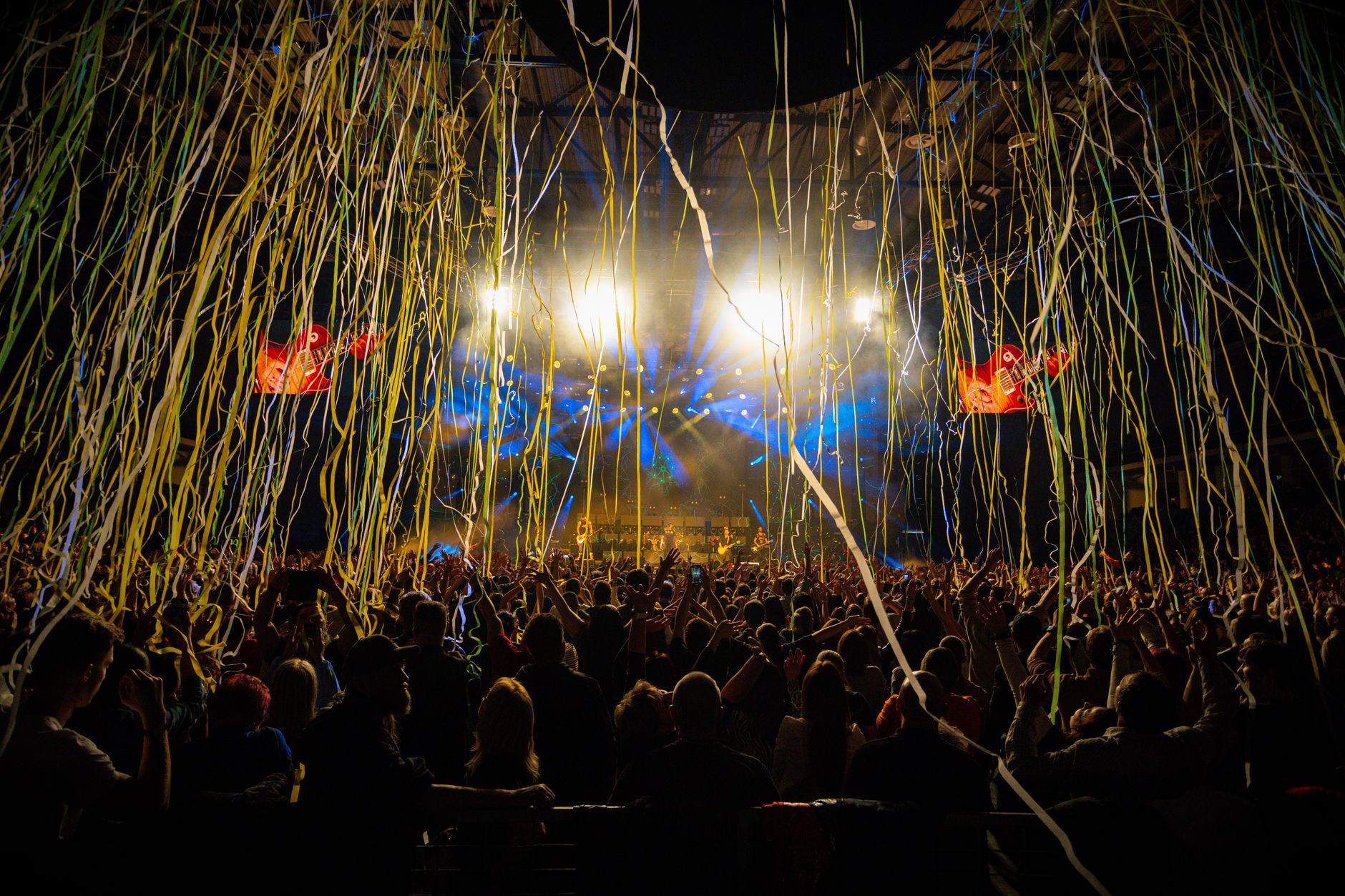
Once you’re in, all the logistical suffering dissolves. This is what going to metal gigs UK is actually about. The cloakroom queue, the bar queue, the finding a spot with sightlines that doesn’t require standing directly behind the tallest person in the building. These are minor obstacles. The wall of sound when the band hits the stage makes every cancelled train worth it.
Smaller venues have a particular intensity that arena shows can’t replicate. I’d rather see a band in a 400-capacity room with genuine danger of losing a shoe in the pit than in a 10,000-seat arena with the mix coming through like a laptop speaker. The UK’s mid-sized venue circuit, places like The Wedgewood Rooms in Portsmouth, The Roadhouse, The Sugarmill in Stoke, is where metal actually lives. These aren’t glamorous buildings. They are, many of them, essentially large rooms above pubs. They sound enormous anyway.
After the show: the post-gig chip shop tradition
The chips are non-negotiable. I don’t care what anyone says about nutrition or the time of night. After ninety minutes of metal at volume, the body requires carbohydrates and salt. This is science.
Every city has its post-gig chip shop and every regular gigging community knows which one it is. In some places it’s a genuine chippy that’s stayed open deliberately because of the venue around the corner. In others it’s a kebab shop that technically also does chips and nobody is particularly fussy about the distinction at 11:30pm. The post-gig chip shop is where you decompress, compare notes, decide which songs were the highlight, and half-heartedly argue about whether the encore went on too long.
There’s a social warmth to this that I find genuinely moving, which is a strange thing to say about eating chips outside a venue in the cold. But the metal scene runs on community, and you feel it most clearly in these small moments: a crowd of people in black, slightly deaf, happy, standing on a British pavement eating out of paper and talking about music.
The morning after: the real cost of going to metal gigs UK
You will not sleep well. Your ears will ring. If you’re travelling home on public transport, the first train might be at 5:47am and you’ll either stay up for it or sleep on a stranger’s sofa. Your clothes will smell of a combination of smoke machine fluid, other people’s deodorant, and something unidentifiable from the venue carpet.
None of this is a complaint. It’s a description of what a good night looks like.
Going to metal gigs UK is always worth it. The logistics are genuinely terrible sometimes. The weather will be against you. The transport will let you down. The queue for the bar will be long and the queue for the gents even longer. But the music, the crowd, the moment when the room locks in together around something loud and real? That doesn’t happen anywhere else. Not on a streaming platform. Not through headphones at home.
If you want to know which festivals offer that feeling at scale without breaking the bank, the rundown of UK metal festivals beyond Download in 2026 covers several that still feel like the community showing up for itself rather than a corporate exercise. And if you’re invested enough in the scene to want the physical, printed side of it too, the world of UK metal fanzines is still very much alive and worth seeking out.
Now go book something. The chips won’t eat themselves.