
There is something very metal about refusing to be seen. Not in the cowardly sense. In the defiant sense. The raised middle finger sense. UK metal and goth communities have always understood that visibility is a form of vulnerability, and in 2026, with facial recognition cameras multiplying across British city centres and smart devices logging everything from your heating habits to your voice, that instinct has sharpened into something that looks a lot like a genuine cultural movement. Anti-surveillance fashion is not a tech trend. It is a war aesthetic.
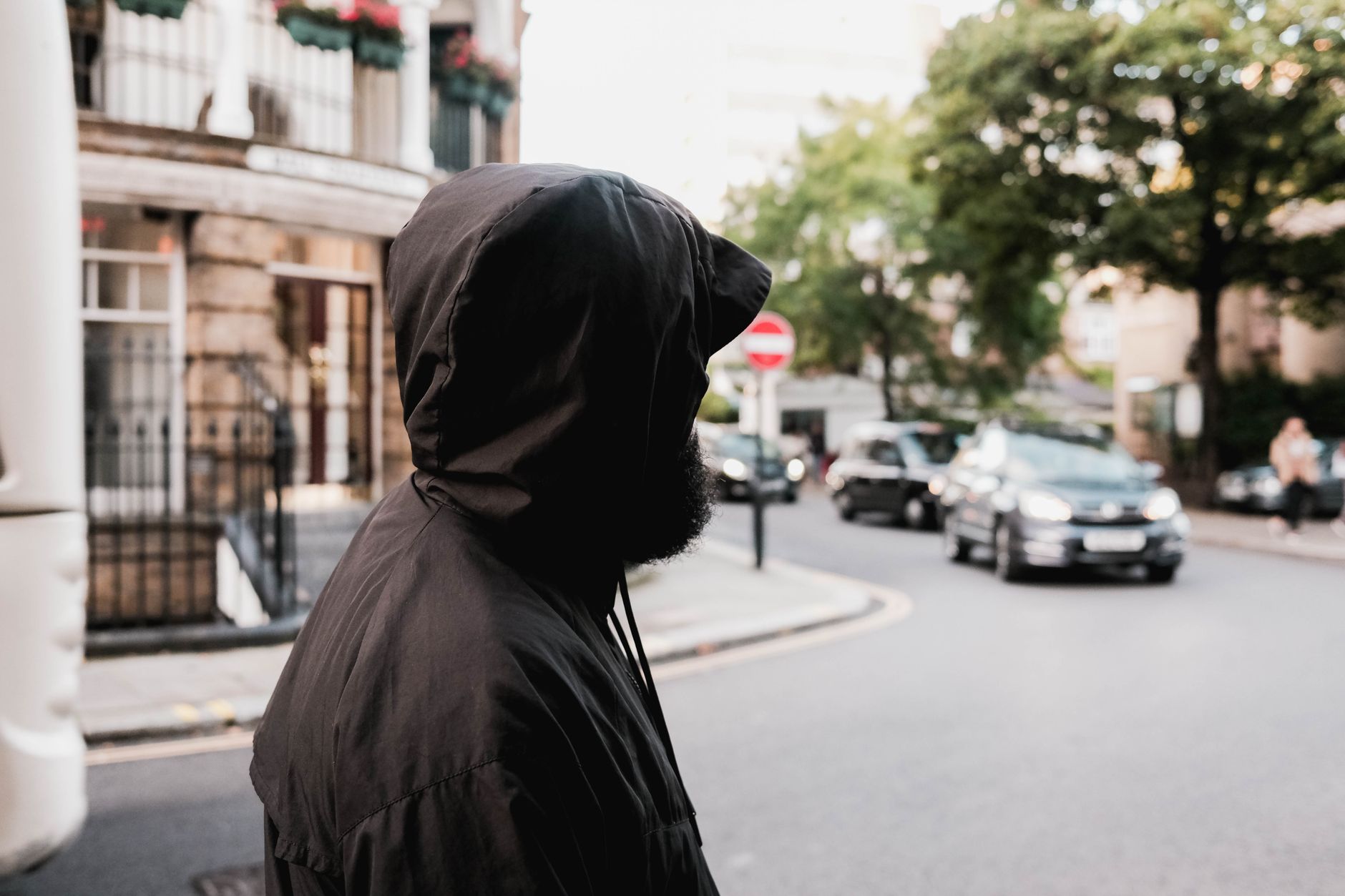
I have been watching this develop for a couple of years now, and what strikes me is how naturally it fits the existing grammar of dark subculture. The heavy hoods. The deep cowls. The geometric face paint borrowed from black metal’s corpse-paint tradition. The mirrored lenses that throw your own gaze back at you. None of this started as a political statement about the Surveillance Camera Commissioner’s code of practice or the proliferation of connected infrastructure. It started as aesthetic. But aesthetics carry politics, whether they mean to or not.
The occult image as counter-signal
Occult imagery in heavy metal has always carried an element of refusal. Refusing mainstream legibility. Refusing the comfortable read. The pentagram, the inverted cross, the sigil-covered jacket, these symbols exist partly to unsettle, to mark the wearer as someone who will not be easily categorised. That function has taken on new weight. When algorithms attempt to process and classify human faces and bodies, ambiguity becomes armour. A face painted in stark black-and-white geometry does not resolve cleanly into a database entry. A hood pulled low over mirrored goggles breaks the angle every time. Whether or not that was the original intention, it works.
I spoke to a few people at a Manchester underground metal night back in spring 2026 who were very conscious of this. One of them, a woman in a full black veil and hand-painted coat covered in alchemical symbols, told me she had not started dressing that way to avoid cameras. She started because she loved the symbolism, the history, the weight of it. But she was not remotely upset that it had that secondary effect. “If the camera can’t read me, I consider that a bonus,” she said. That sentiment is everywhere in this scene right now.
Anonymity aesthetics and the history they draw from
This is not invented from scratch. The black metal tradition of anonymity runs deep: musicians who perform under single-syllable names or runes, bands who release albums with no photographs of the members, artists who appear only masked or painted. That aesthetic of erasure has fed directly into how dark subculture thinks about visibility. When I look at the way the current underground black metal wave presents itself, the refusal to be clearly seen is built into the artistic identity from the ground up.
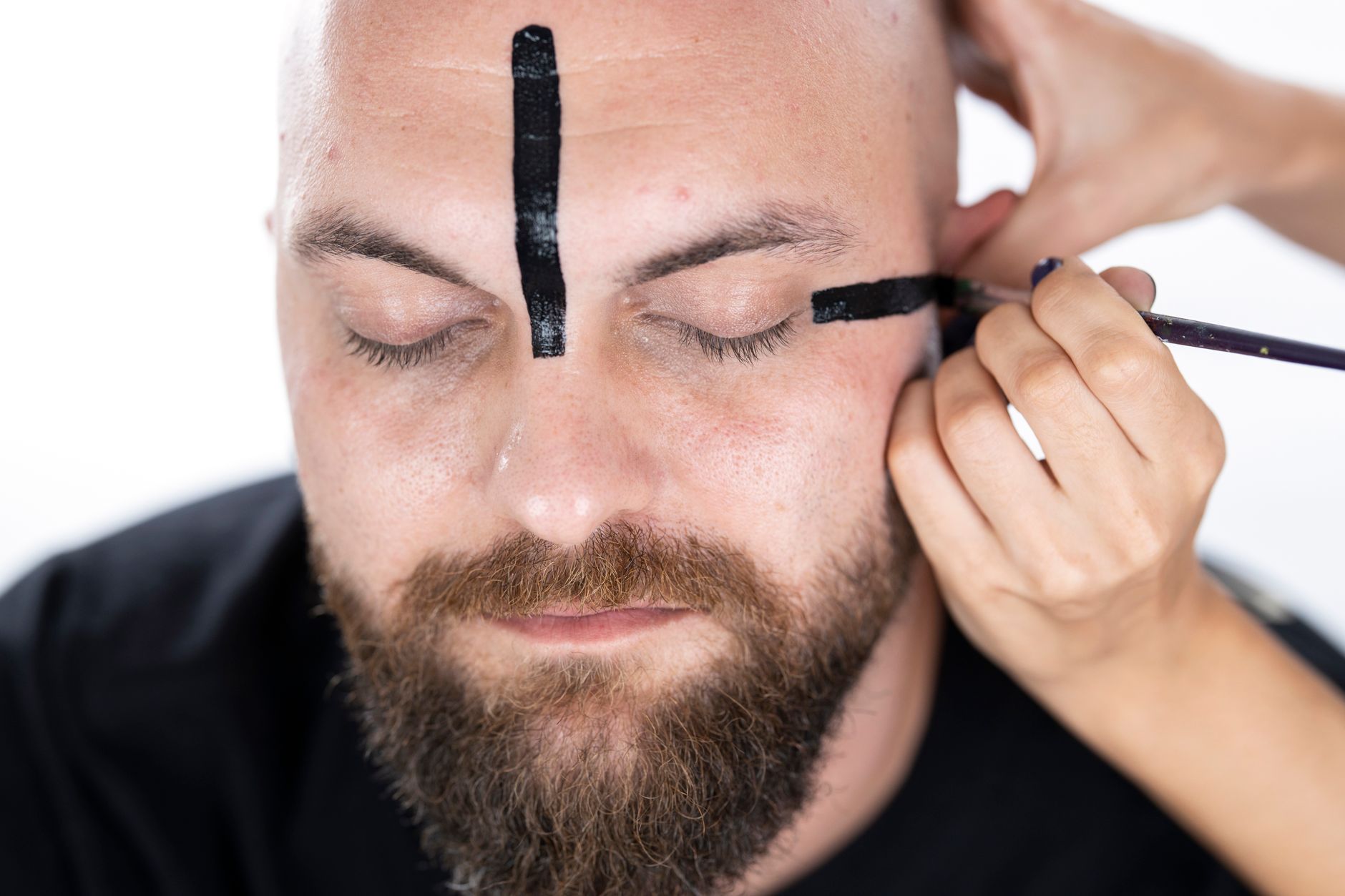
Goth culture has its own version of this. The Victorian mourning dress that conceals rather than displays the body. The heavy kohl that remakes the face into something less readable. These are traditions of masking that predate digital surveillance by centuries, but they slot into the current moment with uncomfortable precision. Dark subculture communities in the UK did not set out to become a manual for counter-surveillance dressing, but here we are.
What is new is the self-awareness. Scroll through the darker corners of UK fashion Instagram or any number of underground zines coming out of Leeds, Birmingham, and Glasgow, and you will find explicit discussions of what clothing choices mean in an environment where your face is data. The occult patch on a jacket is not just a patch. The face veil is not just fashion. The heavy layering described so well in guides to building a metal-influenced dark wardrobe for a British winter serves the dual purpose of keeping out the cold and keeping out the algorithmic gaze.
Smart tech, connected homes, and why the subculture is paying attention
The wariness does not stop at physical surveillance. Metal and goth communities have developed a notable scepticism towards connected devices, smart meters, and the invisible data flows that run through modern British homes and cities. It fits. A subculture that distrusts easy categorisation is naturally disposed to distrust technology that categorises silently, constantly, and without your active consent.
This is not paranoia dressed up as politics. The questions around how networked devices feed into national infrastructure are real and documented. For anyone who wants to go deep on the technical side of how connected home technology feeds into national networks, there is further reading: how smart meters are talking to the national grid: the smets2 communication stack, vulnerabilities, and what ofgem isn’t telling you, and it is illuminating in the most unsettling way. The dark subculture’s gut-level resistance to smart tech is not irrational. It is, arguably, ahead of the mainstream conversation.
There is a through-line here from the occult interest in hidden knowledge to a genuine curiosity about what systems are operating beneath the surface of daily life. Heavy metal has always been drawn to the idea that the visible world conceals something more dangerous. In 2026, that is not metaphor. It is data architecture.
What anti-surveillance fashion actually looks like in British dark subculture
Practically, this plays out in specific ways. Wide-brimmed hats paired with high collars. Visored helmets worn as street accessories rather than protective gear. Reflective or metallic fabrics that bounce light in unpredictable ways. Heavy geometric face paint in the corpse-paint tradition. Long structured coats with deep hoods. Some of this is deliberate counter-surveillance design; some of it is just metal fashion doing what metal fashion does. The effect is the same either way.
The DIY ethos of the UK metal scene makes this accessible in a way that high-fashion “tech-wear” anti-surveillance gear is not. You do not need to spend three hundred quid on a specialist garment. You need a pair of scissors, some reflective iron-on tape, and the kind of creative recklessness that has always defined DIY culture in the UK metal scene. The patch aesthetic, the hand-altered jacket, the customised boot, these already contain the ethos. The anti-surveillance dimension is an extension of something that was already there.
Dark subculture in Britain has always known that conformity is a form of surveillance in itself. Dress like everyone else, think like everyone else, consume like everyone else, and you become legible to every system designed to sort and manage people. The choice to dress in ways that resist easy reading is, at its root, a choice to remain ungovernable. That is a very old metal idea. It just has new context now.
I find it genuinely energising that a scene built on imagery of darkness and occult resistance is arriving at these conclusions organically, through aesthetics first and politics second. That is how the best cultural movements work. The look comes first. The meaning accumulates. By the time the mainstream notices, the subculture has already moved somewhere deeper.
Frequently Asked Questions
What is anti-surveillance fashion?
Anti-surveillance fashion refers to clothing and styling choices designed to make the wearer harder to identify or track by cameras and facial recognition systems. In dark subculture and metal scenes, this often overlaps naturally with existing aesthetic traditions like heavy hoods, face paint, and concealing layers.
Is face paint actually effective against facial recognition cameras?
Geometric, high-contrast face paint, particularly the kind used in black metal corpse-paint traditions, can disrupt the edge-detection algorithms used by some facial recognition systems. It does not guarantee invisibility, but it can significantly reduce the accuracy of automated identification, particularly in lower-resolution CCTV footage.
Why are UK metal and goth communities concerned about surveillance?
Dark subcultures have historically been subject to profiling and social suspicion, so wariness around being watched or categorised has deep roots in these communities. The expansion of facial recognition policing in UK cities and the proliferation of smart home devices has given that existing wariness a very concrete focus.